"The Lost Kingdoms: Secrets of the Ancient World"
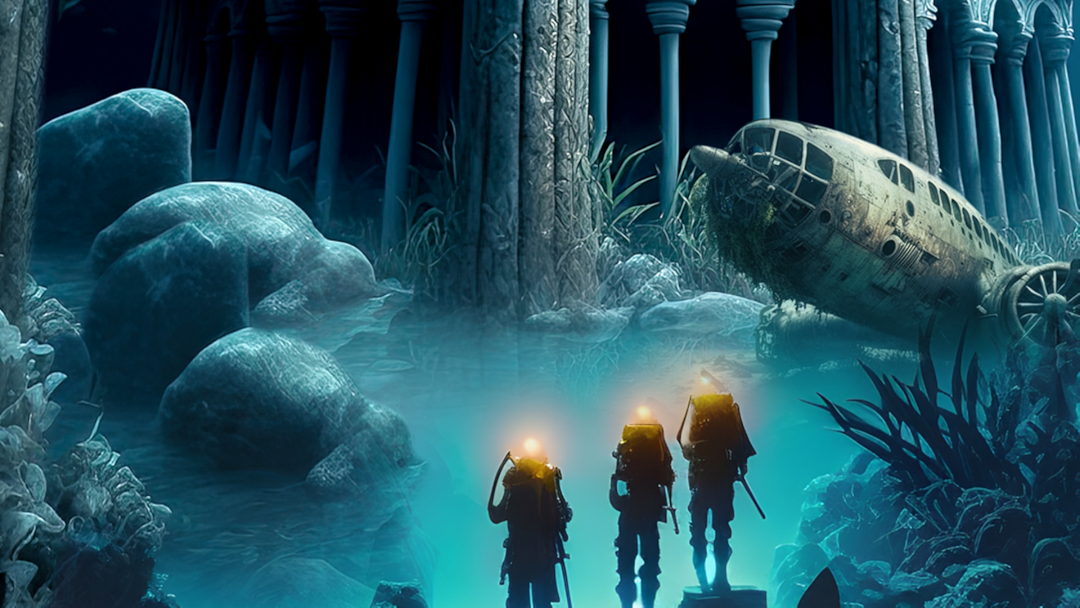
"The Lost Kingdoms: Secrets of the Ancient World" delves into the fascinating story of forgotten civilizations that once flourished across the globe, only to fade away into obscurity. These lost kingdoms, scattered across deserts, jungles, and even beneath the seas, hold mysteries that continue to captivate historians, archaeologists, and adventurers alike. Their secrets, slowly emerging through ongoing discoveries, challenge traditional understandings of human history and our perception of past civilizations.
The concept of "lost kingdoms" often evokes images of grand cities swallowed by time or swallowed by nature. Perhaps the most famous of these is Atlantis, a mythical city described by Plato that has sparked centuries of debate over its true existence. While its legend remains elusive, real lost kingdoms have been uncovered through archaeology, shedding light on the advanced societies that once existed.
One notable example is the city of Machu Picchu in Peru, the once-thriving Incan city hidden in the Andean mountains, rediscovered in 1911 by Hiram Bingham. Though not entirely lost, the site was hidden from the outside world for centuries, and its discovery unveiled the Incan Empire's mastery of engineering, agriculture, and astronomical knowledge. The mystery of how the Incas constructed such a sophisticated city without modern technology still baffles researchers today.
Similarly, The Khmer Empire, with its capital at Angkor, Cambodia, once stood as a dominant force in Southeast Asia. Angkor Wat, the sprawling temple complex, is a testament to the empire's cultural and architectural brilliance. However, much of the empire's history remains shrouded in mystery, with historians still debating why it collapsed. Recent research suggests that environmental changes, political instability, and wars may have contributed to its downfall.
In the deserts of the Middle East, the Sumerian civilization, one of the earliest known societies, left behind an extensive written record that has helped us understand their sophisticated systems of governance, trade, and innovation. However, many of their major cities, like Ur, were abandoned and lost to history for millennia, only to be unearthed by archaeologists in the early 20th century.
Other forgotten kingdoms, like those of the Minoans on Crete and the Mycenaeans in Greece, continue to reveal fascinating secrets about ancient cultures that predated even the classical civilizations of Rome and Greece. Their advanced art, trade networks, and technology challenge the notion that Europe’s ancient civilizations emerged solely from Greek and Roman foundations.
"The Lost Kingdoms: Secrets of the Ancient World" is a reminder that history is full of civilizations whose legacies are only now being uncovered, offering new insights into human achievement, adaptation, and resilience. Each rediscovered kingdom paints a unique picture of the past, adding depth and nuance to our understanding of ancient human societies.