"History's Turning Points: How Key Moments Shaped Our Future"
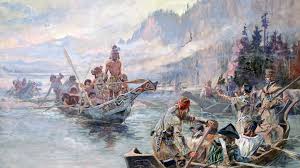
"History's Turning Points: How Key Moments Shaped Our Future" explores pivotal moments in history that have not only altered the course of events but have also influenced the world as we know it today. These defining moments, whether political, social, or technological, serve as markers in human history, setting the stage for the present and shaping the future.
One of the most significant turning points was the fall of the Roman Empire. The collapse of one of the greatest empires in history in the 5th century A.D. led to the fragmentation of Europe and the beginning of the Middle Ages. This moment fundamentally changed the political and cultural landscape of Europe, which would not see the rise of another unified power until the emergence of the Holy Roman Empire and the eventual development of modern nation-states. The fall of Rome also ushered in a period of decentralization, leading to the rise of feudalism and shaping the course of European politics for centuries.
The Renaissance in the 14th to 17th centuries marked another key turning point. This intellectual and artistic movement revived classical knowledge and laid the groundwork for the Enlightenment. It sparked advancements in science, art, literature, and philosophy, leading to the birth of the modern world. Figures like Leonardo da Vinci, Michelangelo, and Galileo transformed human understanding, and the invention of the printing press by Johannes Gutenberg revolutionized the spread of knowledge, igniting a wave of intellectual and cultural change that shaped future generations.
Another critical moment in history came with the Industrial Revolution in the 18th and 19th centuries. The shift from agrarian economies to industrialized ones transformed societies on a global scale. It revolutionized production, transportation, and communication, laying the foundation for the modern global economy. The growth of factories, the rise of cities, and the spread of technology redefined daily life, creating new social classes and reshaping the workforce. The Industrial Revolution also had far-reaching effects on global trade, the environment, and the very structure of societies.
The World Wars of the 20th century were also profound turning points. The devastation of World War I led to the reshaping of borders, the collapse of empires, and the creation of new political ideologies, including communism and fascism. World War II, with its unprecedented scale of destruction, not only ended colonial empires but also triggered the Cold War, dividing the world into capitalist and communist blocs. The formation of international organizations like the United Nations and the advent of nuclear weapons brought new dimensions to global politics, forever altering international relations.
Finally, the digital revolution of the late 20th and early 21st centuries has fundamentally transformed the way we live, work, and communicate. The rise of the internet, the development of personal computers, and the advent of mobile technology have reshaped economies, cultures, and even political systems, making it clear that history’s turning points continue to define our future.
"History’s Turning Points: How Key Moments Shaped Our Future" illustrates that history is not a linear path but a series of transformative events that continually shape the trajectory of human civilization. Understanding these moments helps us appreciate the complexity of the world we live in and the forces that continue to shape our destiny.